Inside NOGOR: How We Built a Growth Engine with Meta Ads, GA4 & Server-side Tracking
Sobuj/July 11, 2026/12 min read
Key Takeaway
A behind-the-scenes breakdown of how a fragmented ecommerce marketing setup evolved into a measurable growth system using Meta Ads, GA4, GTM and server-side tracking.
Architecture
Inside NOGOR: How We Built a Growth Engine with Meta Ads, GA4 & Server-side Tracking
When people see an ecommerce brand processing thousands of orders every month, they usually assume the secret is simple:
"Great ads."
Or maybe,
"They have amazing creatives."
The truth is far less glamorous.
Profitable growth rarely comes from a single winning campaign.
It comes from building a system.
When I joined NOGOR, our goal wasn't just to increase sales—it was to create a marketing engine capable of making reliable, data-driven decisions at scale.
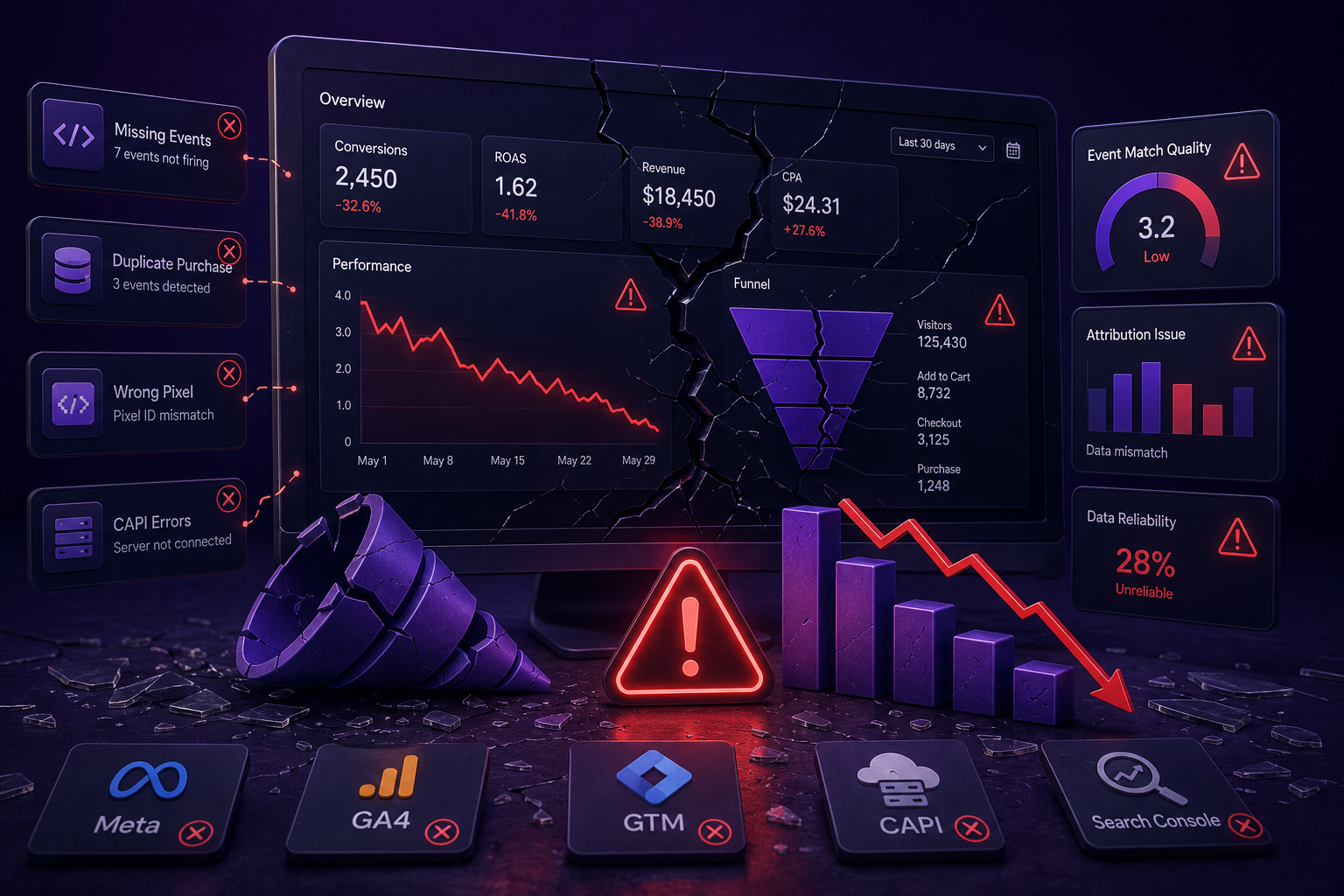
Like many growing ecommerce brands, we faced challenges that weren't immediately visible inside Ads Manager.
Campaigns were running.
Sales were coming in.
But the data wasn't telling the full story.
Without trustworthy measurement, every optimization became partly guesswork.
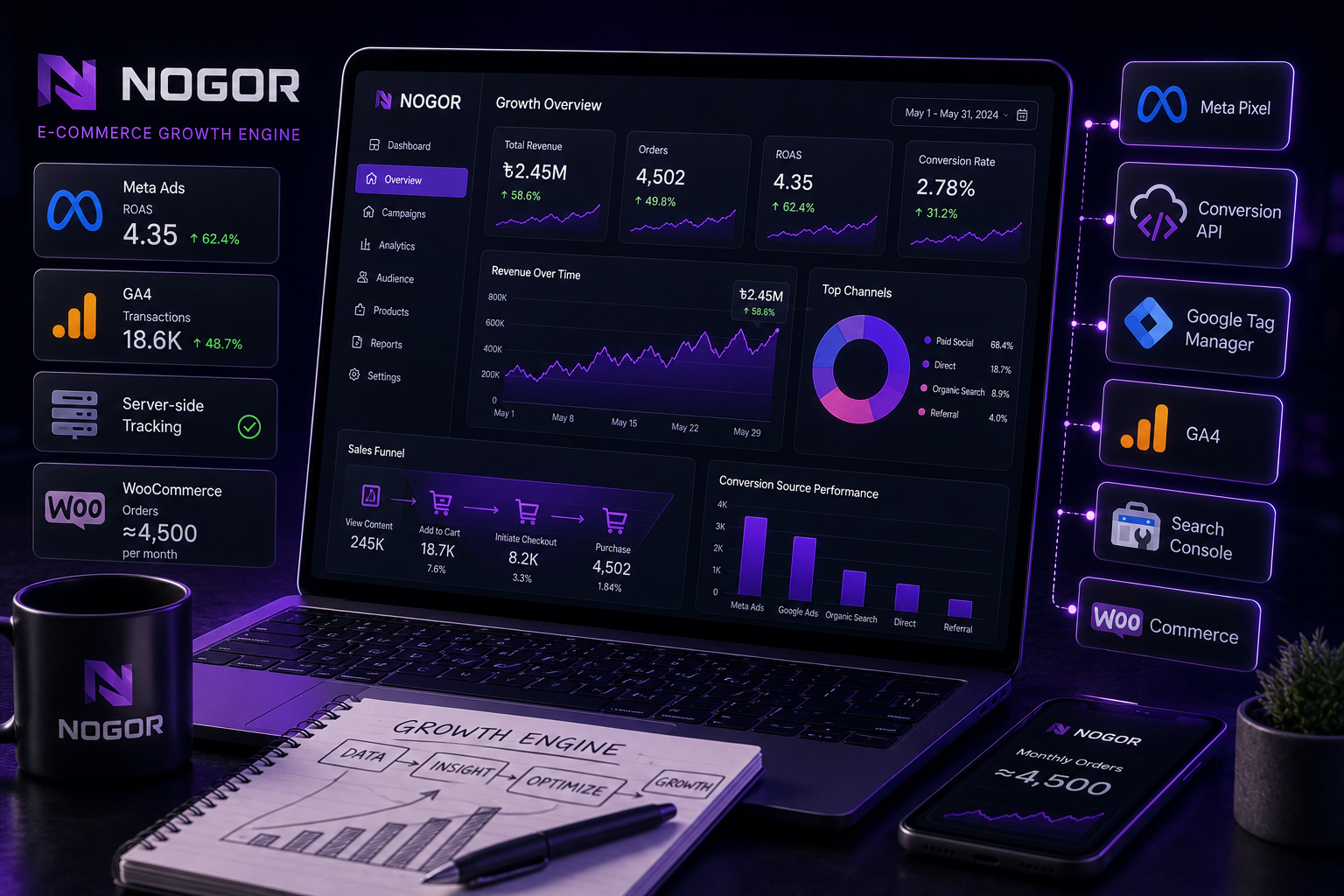
This case study is a behind-the-scenes look at how we transformed a fragmented marketing setup into a measurable growth system powered by Meta Ads, GA4, Google Tag Manager, Meta Conversion API, WooCommerce, Search Console, and server-side tracking.
The biggest lesson?
Growth isn't built by spending more. It's built by measuring better.
The Business Challenge
Every growing ecommerce business eventually reaches a point where traditional marketing methods stop working.
Budgets increase.
Campaign complexity increases.
Traffic increases.
But confidence in the numbers decreases.
That was exactly the challenge.
Instead of one obvious problem, there were dozens of small problems quietly affecting performance.
Individually they looked harmless.
Together they limited growth.
Existing Issues
Before rebuilding the marketing infrastructure, several important gaps existed.
No Reliable Attribution
Different platforms reported different conversion numbers.
Meta Ads showed one result.
Google Analytics showed another.
The ecommerce platform reported something else.
Without consistent attribution, it became difficult to answer simple questions like:
Which campaign actually generated revenue? Which audience deserved more budget? Which creative was driving profitable customers?
Every decision contained uncertainty.
Incomplete Tracking
Customer actions weren't being measured consistently.
Some important events fired correctly.
Others didn't.
Browser limitations reduced tracking reliability.
Several valuable customer signals never reached Meta's optimization system.
Without complete data, machine learning couldn't perform at its full potential.
Because reporting wasn't fully reliable, many decisions required manual analysis.
Instead of trusting dashboards, performance had to be verified across multiple platforms.
This slowed optimization and introduced unnecessary complexity.
The goal became clear:
Build one measurement ecosystem where every important marketing decision could be supported by accurate data.
What We Built
Rather than searching for another "winning campaign," we focused on building a complete marketing infrastructure.
Each tool was assigned a specific responsibility.
Together they formed one connected growth engine.
Meta Pixel
The first step was ensuring accurate browser-side event tracking.
Key ecommerce events such as:
View Content Add to Cart Initiate Checkout Purchase
were properly implemented and validated.
This provided Meta with essential behavioral signals directly from the website.
Google Analytics 4 (GA4)
Next came a complete GA4 implementation.
Instead of measuring only traffic, GA4 became the primary platform for understanding customer behavior.
It allowed us to answer questions like:
Where do visitors come from? Which channels generate revenue? Which landing pages convert best? Where do users abandon the funnel? Which devices perform differently?
Rather than looking only at advertising metrics, we could finally understand the entire customer journey.
Google Tag Manager became the central control layer.
Using GTM allowed us to:
Manage tracking without constant code edits Deploy new tags efficiently Test implementations safely Reduce deployment time Keep marketing tools organized
Instead of scattered scripts across the website, everything became centralized.
Meta Conversion API (CAPI)
Browser tracking alone no longer provides enough reliable data.
Privacy updates and browser restrictions reduce the number of measurable conversions.
To strengthen measurement, we implemented Meta Conversion API.
Server-side tracking allowed important conversion events to reach Meta even when browser tracking became unreliable.
This improved:
Event consistency Attribution quality Optimization signals Event Match Quality Overall data confidence
Pixel and CAPI worked together rather than competing with each other.
Google Search Console
Paid marketing wasn't the only growth channel.
Search Console provided visibility into organic search performance by monitoring:
This ensured SEO and paid advertising supported each other rather than operating independently.
WooCommerce
Since NOGOR operates on WooCommerce, the ecommerce platform became the central source of transactional truth.
Orders, revenue, customer information, and product data all originated here.
The objective wasn't simply collecting data.
It was ensuring every important transaction flowed consistently across the marketing ecosystem.
Server-side Tracking
Perhaps the most significant improvement came from implementing server-side tracking.
Instead of depending solely on browser events—which are increasingly affected by privacy restrictions—we created a more resilient measurement system.
Server-side tracking improved:
Data reliability Conversion accuracy Attribution consistency Signal quality Long-term measurement stability
In today's privacy-first environment, server-side tracking isn't simply an advanced feature.
It's becoming a competitive advantage.
The Results
Technology alone doesn't create growth.
Better decisions do.
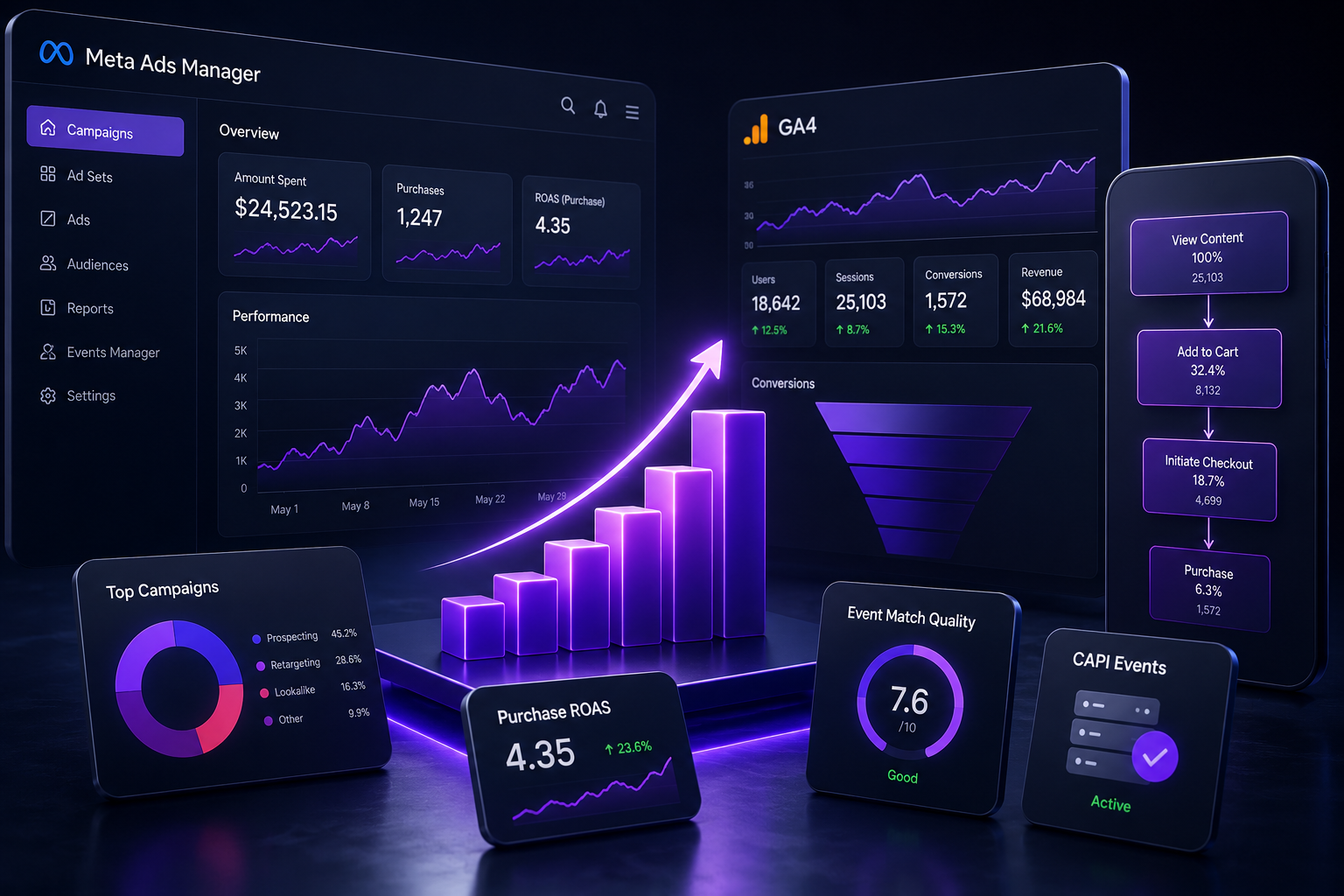
Once the measurement foundation became more reliable, every optimization became easier.
Better Data
The biggest improvement wasn't a dashboard.
It was confidence.
Campaign analysis became more trustworthy because decisions were supported by cleaner data instead of assumptions.
When the data improves, the quality of every marketing conversation improves with it.
Better ROAS
As Meta received stronger optimization signals, campaign efficiency became more stable.
Instead of reacting to incomplete information, the algorithm could better identify users likely to convert.
Higher-quality signals generally lead to higher-quality optimization.
More Accurate Reporting
One of the most valuable outcomes was reducing confusion between platforms.
Although attribution models will never match perfectly, reporting became significantly more consistent across Meta Ads, GA4, and WooCommerce.
This reduced uncertainty and increased confidence in budget decisions.
Smarter Decisions
Reliable measurement changed how optimization happened.
Instead of asking:
"What do we think is happening?"
We could ask:
"What does the data actually tell us?"
That shift—from opinion to evidence—is one of the biggest competitive advantages a marketing team can develop.
Scaling to Approximately 4,500 Monthly Orders
With stronger tracking, cleaner attribution, and more informed optimization, the marketing system became capable of supporting continued ecommerce growth.
Today, NOGOR processes approximately 4,500 monthly orders, supported by a measurement-first marketing approach rather than isolated advertising tactics.
While many factors contribute to business growth—including products, pricing, operations, customer service, and creative—accurate measurement plays a critical role in helping each of those efforts perform more effectively.
Five Lessons We Learned
Every ecommerce business is different.
But these lessons apply almost everywhere.
1. Better Data Beats More Data
Collecting thousands of events means very little if those events aren't accurate.
Reliable measurement is always more valuable than overwhelming volume.
2. Tracking Is Not a One-Time Project
Websites evolve.
Platforms change.
Privacy policies shift.
Tracking should be reviewed regularly—not installed once and forgotten.
3. Attribution Is Never Perfect
Different platforms measure conversions differently.
The goal isn't identical numbers.
The goal is understanding why the numbers differ and making informed decisions anyway.
4. Marketing Works Best as One Connected System
Meta Ads, GA4, GTM, WooCommerce, Search Console, and CAPI become far more valuable when they work together instead of operating in isolation.
A connected ecosystem produces better insights than disconnected tools ever can.
5. Scale Follows Measurement
Many businesses try to scale first and fix tracking later.
The opposite approach is far more sustainable.
Measure accurately.
Optimize confidently.
Scale intelligently.
Conclusion
Looking back, the biggest transformation wasn't a new advertising strategy.
It was a new way of thinking.
Instead of treating marketing as a collection of campaigns, we treated it as a connected growth system.
That meant investing in infrastructure before increasing budgets.
It meant trusting evidence over assumptions.
And it meant understanding that every optimization decision is only as good as the data behind it.
Today, when we evaluate performance, we're not simply asking whether an ad generated sales.
We're asking whether the entire system is producing reliable signals that help us make smarter decisions tomorrow.
Because sustainable ecommerce growth isn't built on guesswork.
It's built on measurement.
And when measurement becomes a competitive advantage, growth becomes far more predictable.
If you're running Meta Ads, Google Ads, or an ecommerce business and your reports don't tell a consistent story, the problem may not be your campaigns.
It may be the system behind them.
Building that system is where real growth begins.
Marketing Audit CTA
Want this kind of diagnosis for your own funnel?
I can review your campaign, tracking, analytics, offer, and conversion path to identify the highest-leverage growth fixes.