The Hidden Cost of Bad Tracking: How Broken Data Kills Profitable Campaigns
Sobuj/July 11, 2026/10 min read
Key Takeaway
Businesses lose thousands every month because they optimize using incorrect data. Here's how inaccurate tracking silently destroys profitable campaigns.
Architecture
The Hidden Cost of Bad Tracking: How Broken Data Kills Profitable Campaigns
Imagine you're driving a car at 100 km/h.
Now imagine the speedometer is broken.
The fuel gauge is inaccurate.
The GPS keeps showing the wrong location.
The engine warning light never turns on.
Would you trust the dashboard?
Of course not.
Yet this is exactly how thousands of businesses run their digital marketing every single day.
They spend thousands of dollars on Meta Ads, Google Ads, and SEO while making decisions based on inaccurate data.
The tragedy isn't that their advertising is bad.
The tragedy is that they don't know what's actually happening.
Bad tracking doesn't always announce itself with an error message.
It works silently.
Campaigns continue running.
Budgets continue increasing.
Reports still show numbers.
But those numbers are wrong.
And when your data is wrong, every optimization decision becomes a guess.
The result isn't just lower ROAS.
It's months of wasted learning, missed opportunities, and revenue that never reaches your business.
---
# Why Tracking Matters
Every modern advertising platform is powered by machine learning.
Meta, Google, and other advertising systems don't magically know who your customers are.
They learn from signals.
Every event you send—whether it's a page view, add-to-cart, checkout, purchase, or lead—helps these platforms understand which users are most likely to convert.
Think of tracking as the language between your website and the advertising algorithm.
Every event is a sentence.
Every conversion is feedback.
Every purchase teaches the algorithm something valuable.
Now imagine speaking to someone while every third word disappears.
The conversation quickly becomes confusing.
That's exactly what happens when tracking is inaccurate.
Meta starts optimizing for incomplete information.
Google receives inconsistent conversion data.
GA4 reports don't match actual sales.
Your dashboards become less trustworthy every day.
Eventually, you're no longer optimizing marketing.
You're optimizing reporting errors.
---
# Common Tracking Mistakes
Most tracking problems aren't caused by Meta or Google.
They're caused by incorrect implementation.
Let's look at the most common issues that quietly destroy campaign performance.
---
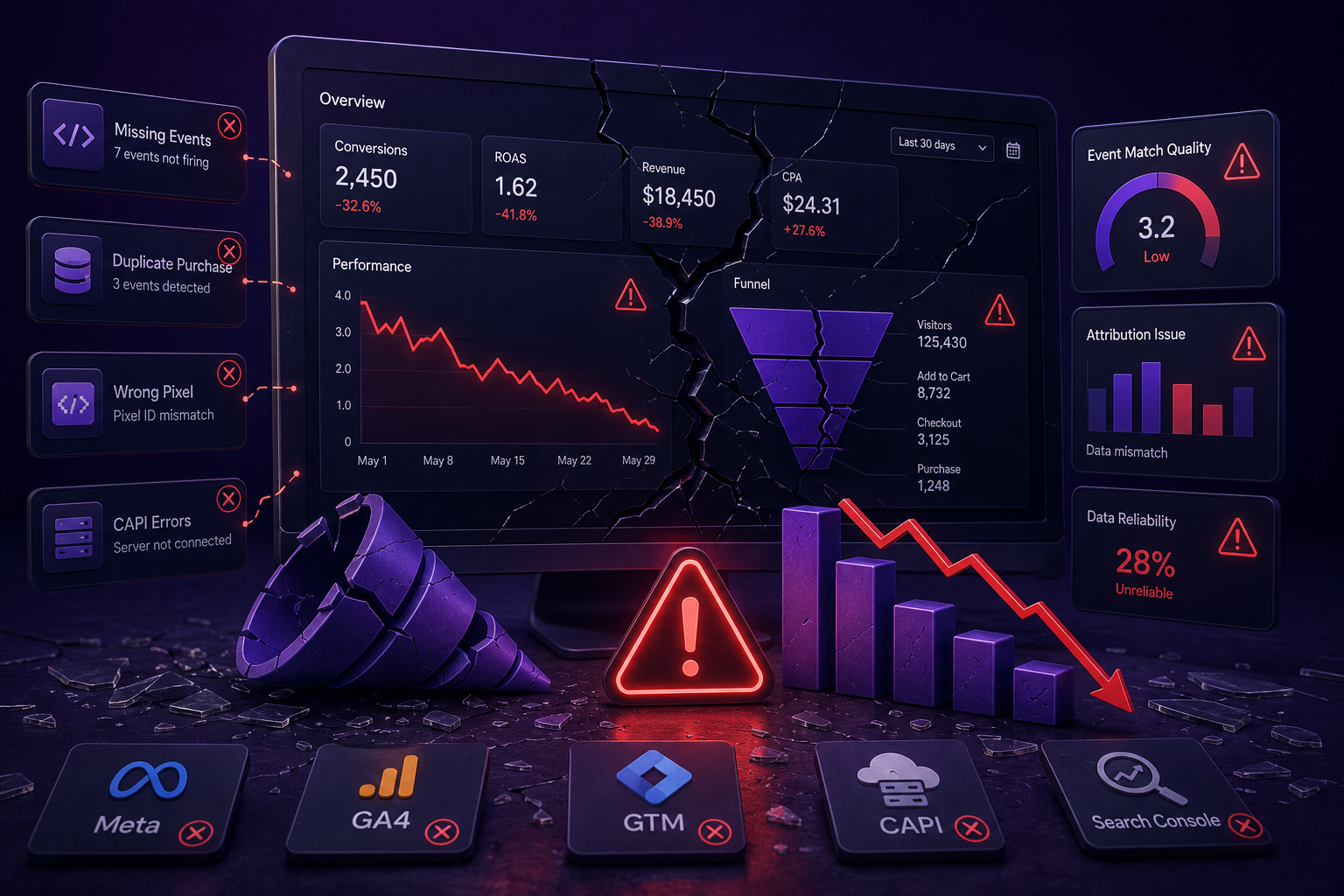
Duplicate Purchase Events
This is one of the most damaging mistakes.
A customer places one order.
Your browser Pixel sends a Purchase event.
Your Conversion API sends another Purchase event.
A WooCommerce plugin fires a third Purchase event.
Meta now believes one customer generated three purchases.
Your ROAS appears amazing.
Your CPA looks fantastic.
Management celebrates.
Then reality arrives.
Revenue never matches the reports.
Scaling decisions become completely unreliable.
Duplicate events don't improve optimization.
They corrupt it.
---
Wrong Meta Pixel
Many businesses accidentally install the wrong Pixel.
Sometimes an old agency Pixel remains active.
Sometimes multiple Pixels fire simultaneously.
Sometimes the website sends data to a completely different Business Manager.
The consequences are serious.
* Meta learns from someone else's customers. * Your account loses valuable optimization data. * Custom Audiences become inaccurate. * Lookalike Audiences become weaker. * Historical learning becomes fragmented.
One incorrect Pixel ID can quietly reduce campaign efficiency for months.
---
Missing Conversion API (CAPI)
Browser tracking alone is no longer enough.
Privacy regulations, browser restrictions, and iOS updates prevent many browser events from reaching Meta.
That's where Conversion API becomes essential.
CAPI sends events directly from your server.
Without it, Meta may never receive many of your actual conversions.
That means:
* Fewer optimization signals * Lower Event Match Quality * Incomplete attribution * Less stable performance * Slower machine learning
Pixel tells part of the story.
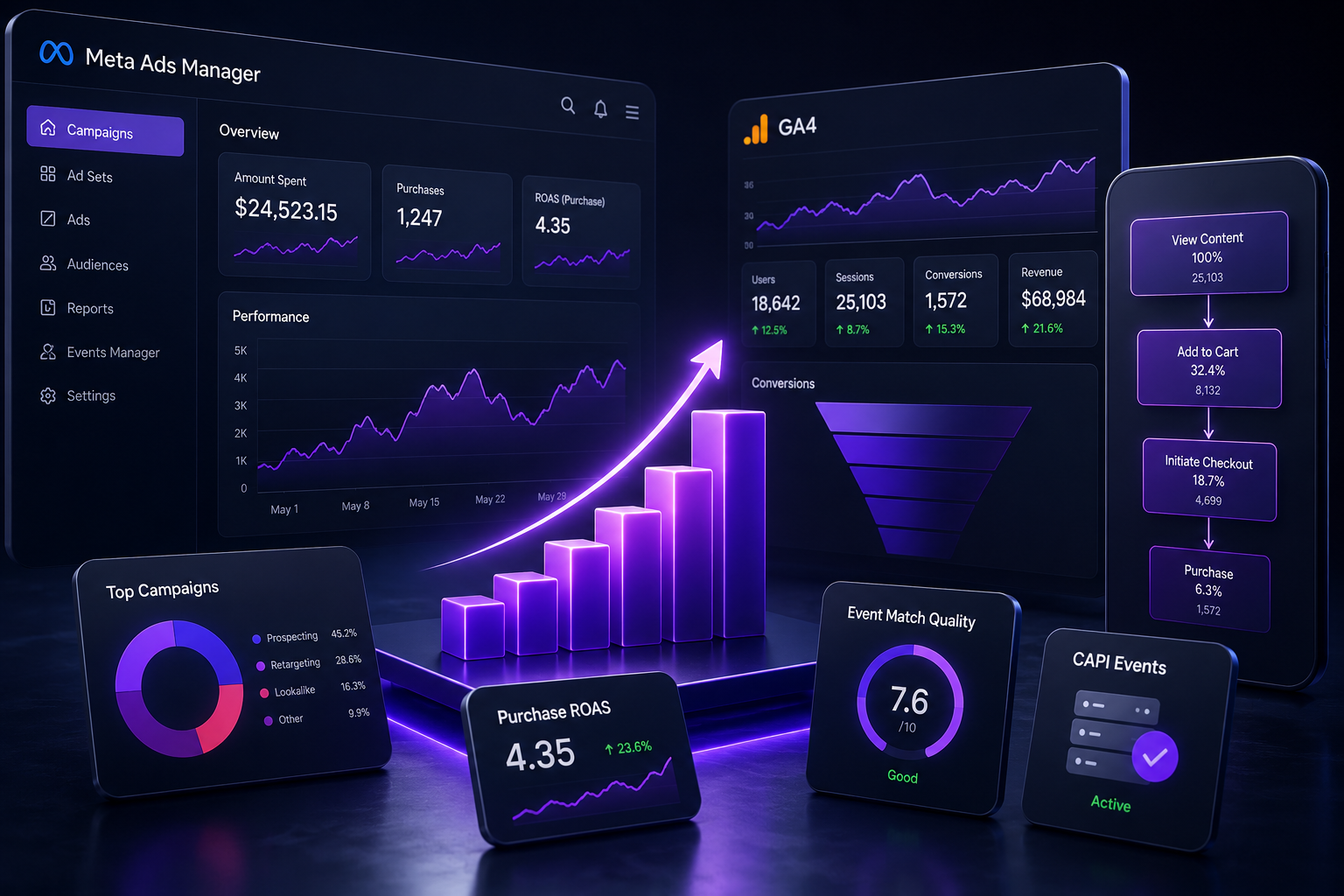
Pixel + CAPI tells the whole story.
---
Broken Google Tag Manager (GTM)
Google Tag Manager is incredibly powerful.
It's also incredibly easy to misconfigure.
A small mistake can prevent dozens of important events from firing.